Samūm
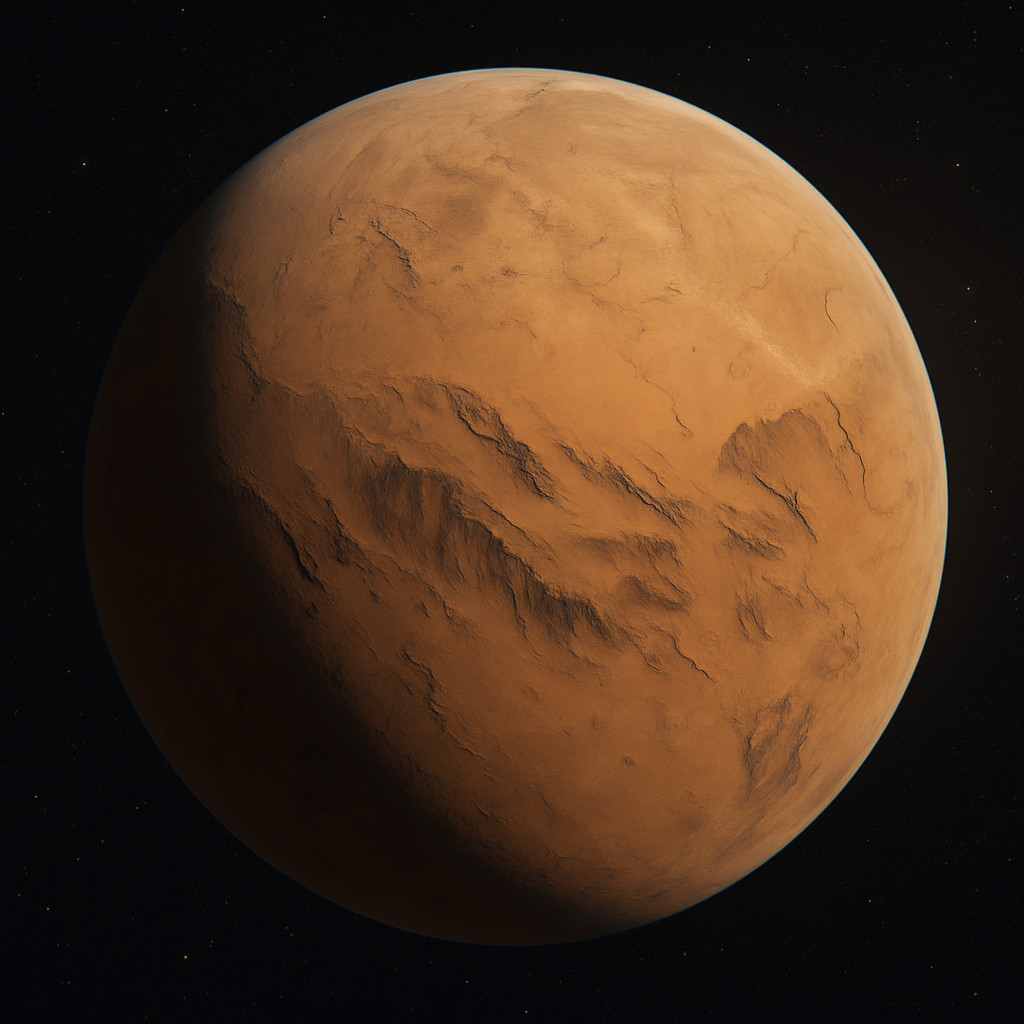
Planetary Snapshot
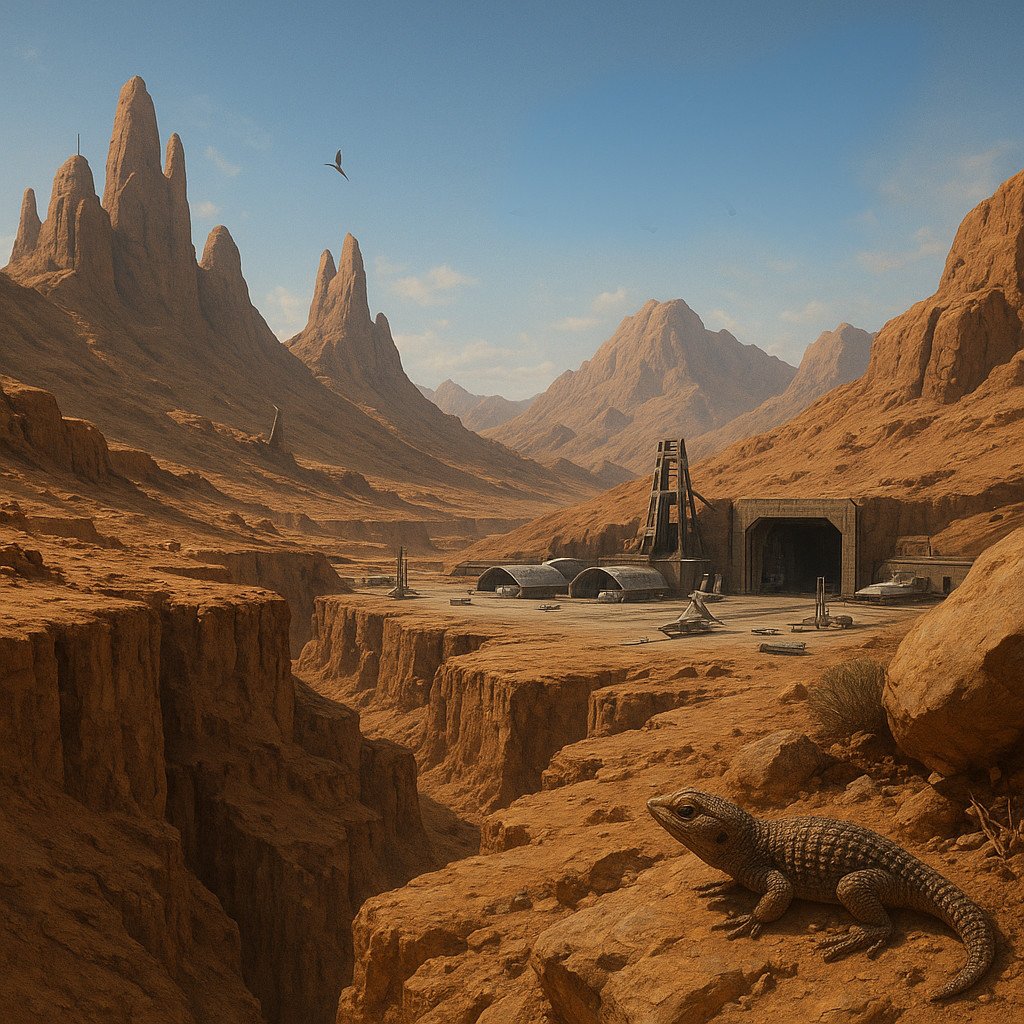
- Desert World. Samūm has a 812 hour day cycle. It is scorching and dry during it's day under a thick, often dust-laden atmosphere, then plunges to freezing temperatures at night.
- Gravity & Air. Surface gravity registers at 1.8 g; air pressure ranges from 3.5-3.8 bar with only 7% oxygen.
- Surface Scars. Long, crisscrossing valleys etch the crust, exposing strata that once hid underground seas.
Settlements and Civil Networks
The Combs
see also: The Combs
- Underground city: Primary colony on the planet and home to 1.5 million residents.
- Subterranean domes carved underground using power fusion engines from the ElSahara colony ship. The ship's hull is still found within and forms the central palace.
- Bustling market spirals, gardens, and residential terraces cluster around nine large vertical central underground atrium.
Surface Cities
- Fasco - Population 10,000 Northern oasis city surrounded by caves and sparse natural water reserves.
- Quoath - Population 7,500 Spaceport-adjacent hub city in the shadow of the Combs. Sided with the Combs during the 2220 water wars, but now partially self-governing.
- Al-Qitra'a - Population 2,500-6,000 Deep valley settlement. Mostly transient population from various nomadic groups.
- Faith Valley - Population 2,500 Remote cave-linked oasis complex sheltering shallow underground lakes.
- Shika - Population 500 High plateau settlment, residents endure extreme cold and thin air.
Nomadic Networks
Approximately 7,500 nomads traverse dunes and canyon rims, prospecting minerals, building and tending solar arrays, or trading in food and supplies. Wealth disparities run wide. Some groups are apparently quite wealthy and run surface construction contracts with the Combs. Others are nomadic groups living on the brink.
Notable Surface Infrastructure Features
- Solar Array Belts. Mirrored spines stretch across long mountain ridges, feeding energy into batteries used by cities or even the combs. Maintained by surface nomadic groups.
- Thermal Stack Complex. South of Quoath, a tri-stack thermal battery that stores captured heat; its vent towers house the power arrays for blasting ships and cargo into orbit.
- Condensation Spires. Atmospheric moisture processors processors along canyon ridges and cave entrances draw moisture into reservoirs before it escapes the underground. Found around population centers.
Physical Geography
Desert Plains
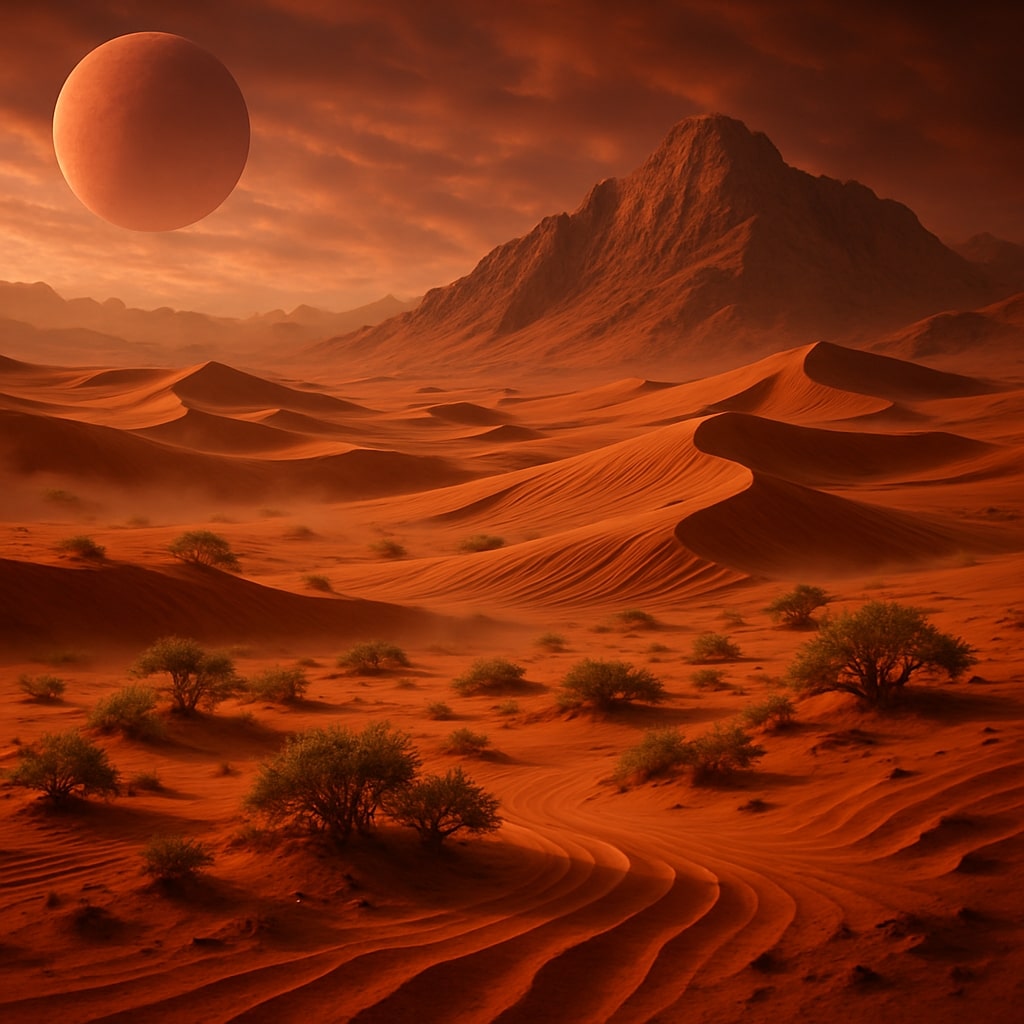 Vast red deserts host dunes sculpted by relentless winds. Daytime temperatures reach 60–70 °C before plunging near freezing at night. In the 2260s, Nüüdelchid-led efforts began to gain some control over the dunes through sparse, bioengineered flora relying on nightly dew cycles to survive.
Rocky Plateaus
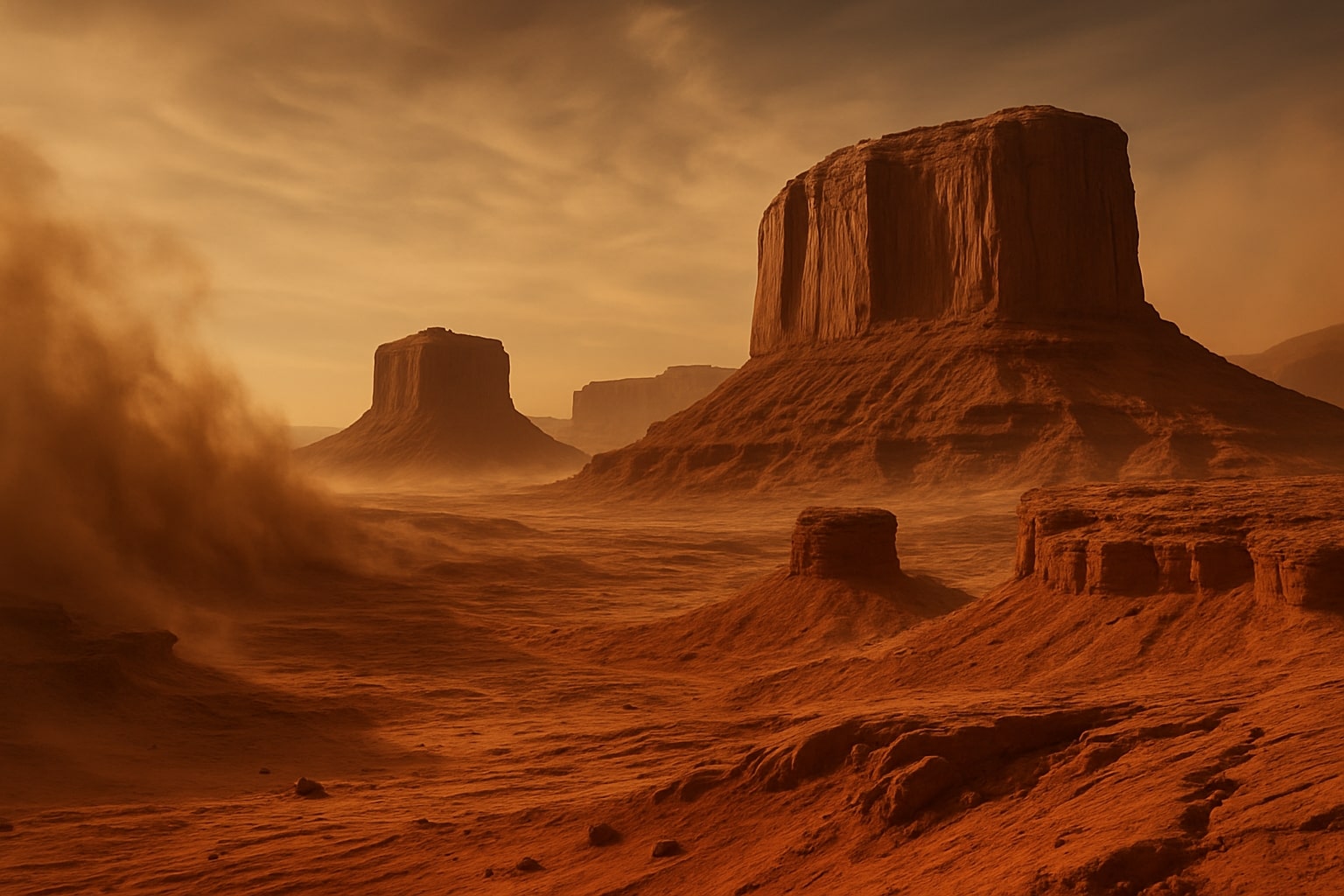 Eroded mesas rise across higher latitudes, battered by harsh winds and dust storms. Day temperatures climb to 80–90 °C, while nights hover near -5–10 °C. Bare rock faces pointed toward Mingusat remain lifeless.
Canyon Gorges and Oasis Valleys
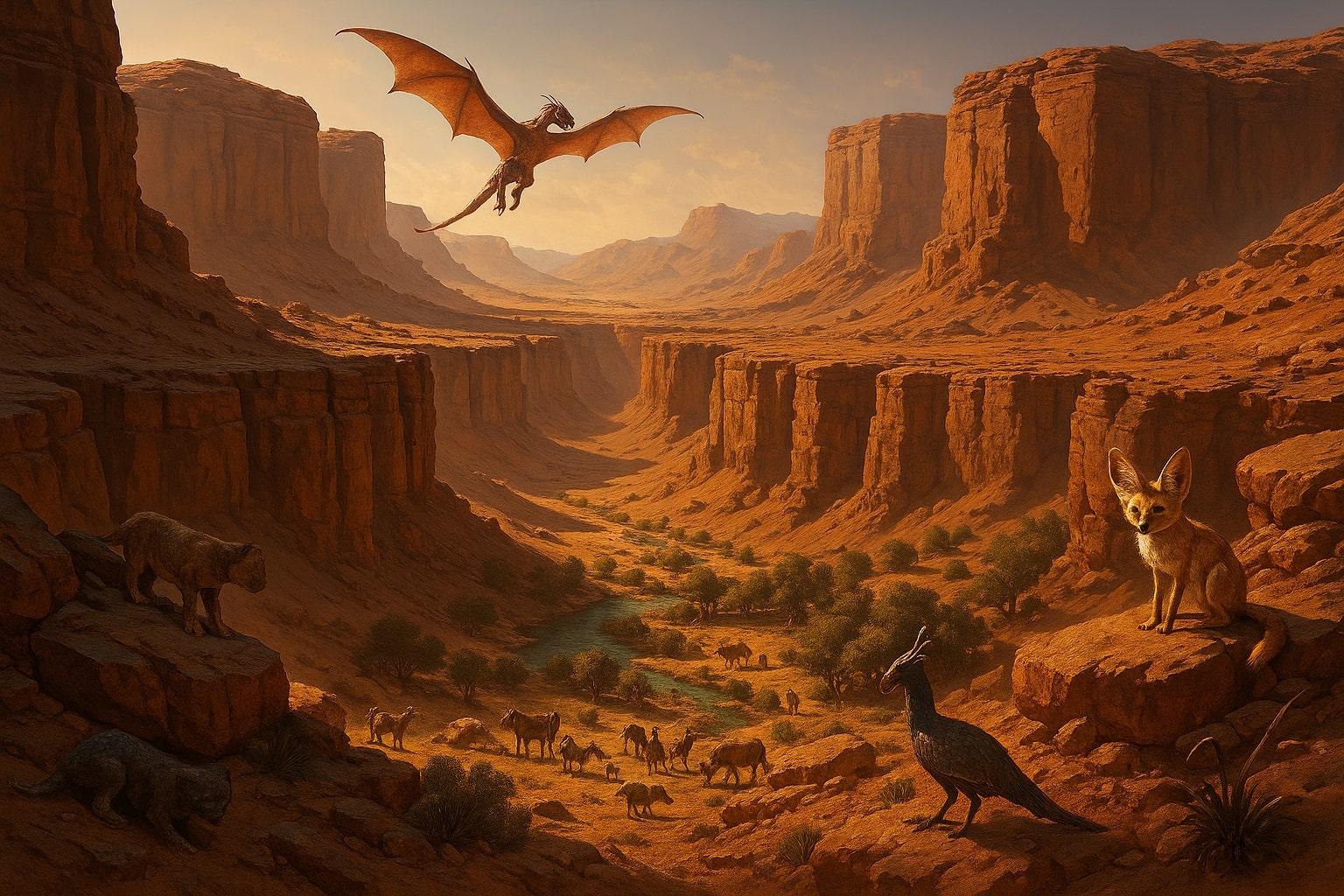 Ancient waterways and planetary contraction carved deep gorges that shield inhabitants from temperature extremes (15–25 °C at night, 60–70 °C by day). Some canyons conceal outlets to subterranean streams and secret underground lakes. The knowledge of these water sources was once closely guarded by the kings to protect their power base. Oasis valleys now cradle small settlements, wildlife, and caravan rest points.
Cave Systems
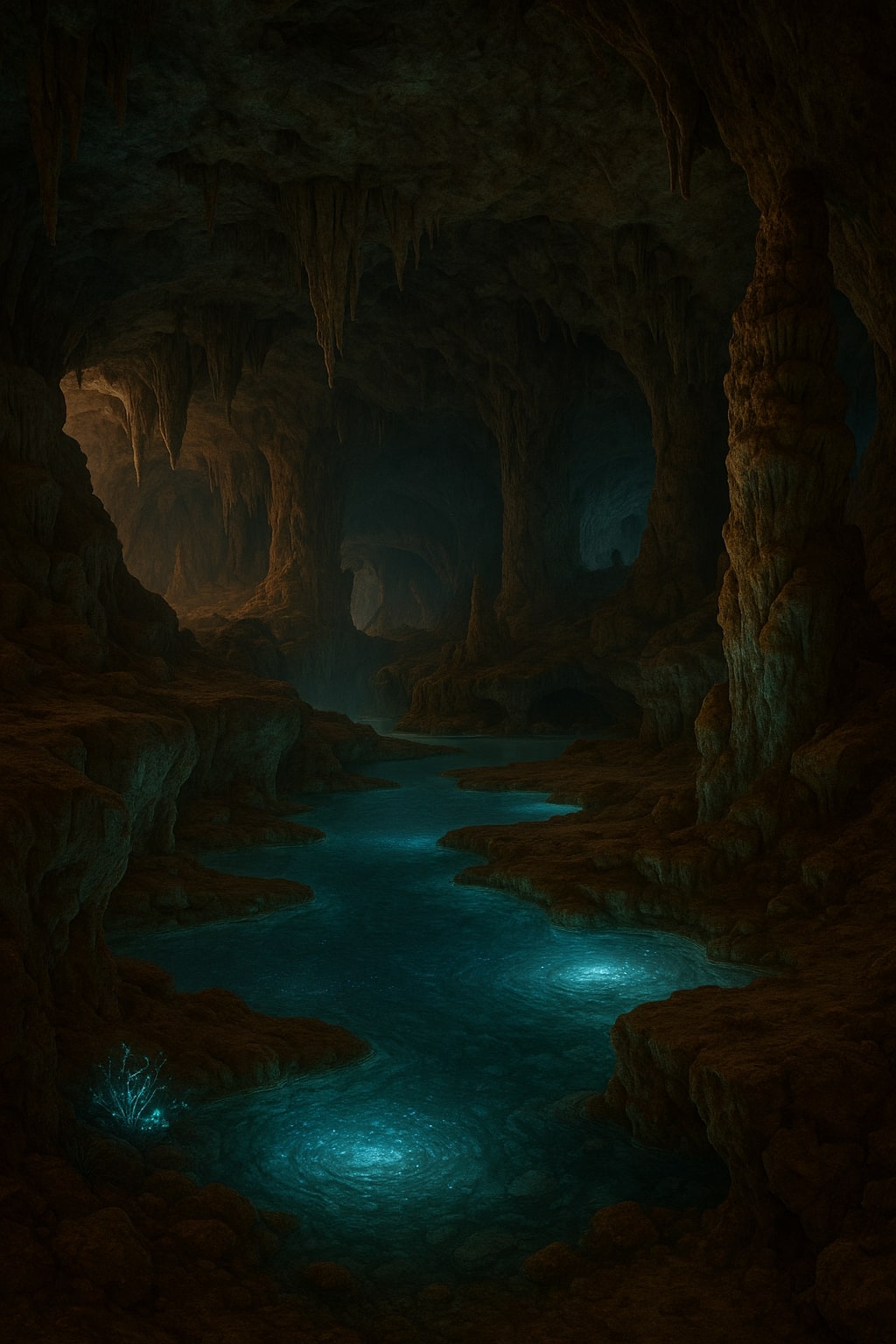 Extensive limestone caverns braid through the subsurface, harboring subterranean lakes and specialized ecosystems. Temperatures stay stable, 15–20 °C at night and up to 25 °C by day. Bioluminescent organisms adapted to darkness thrive in dissolved mineral pools.
Mountain Ranges
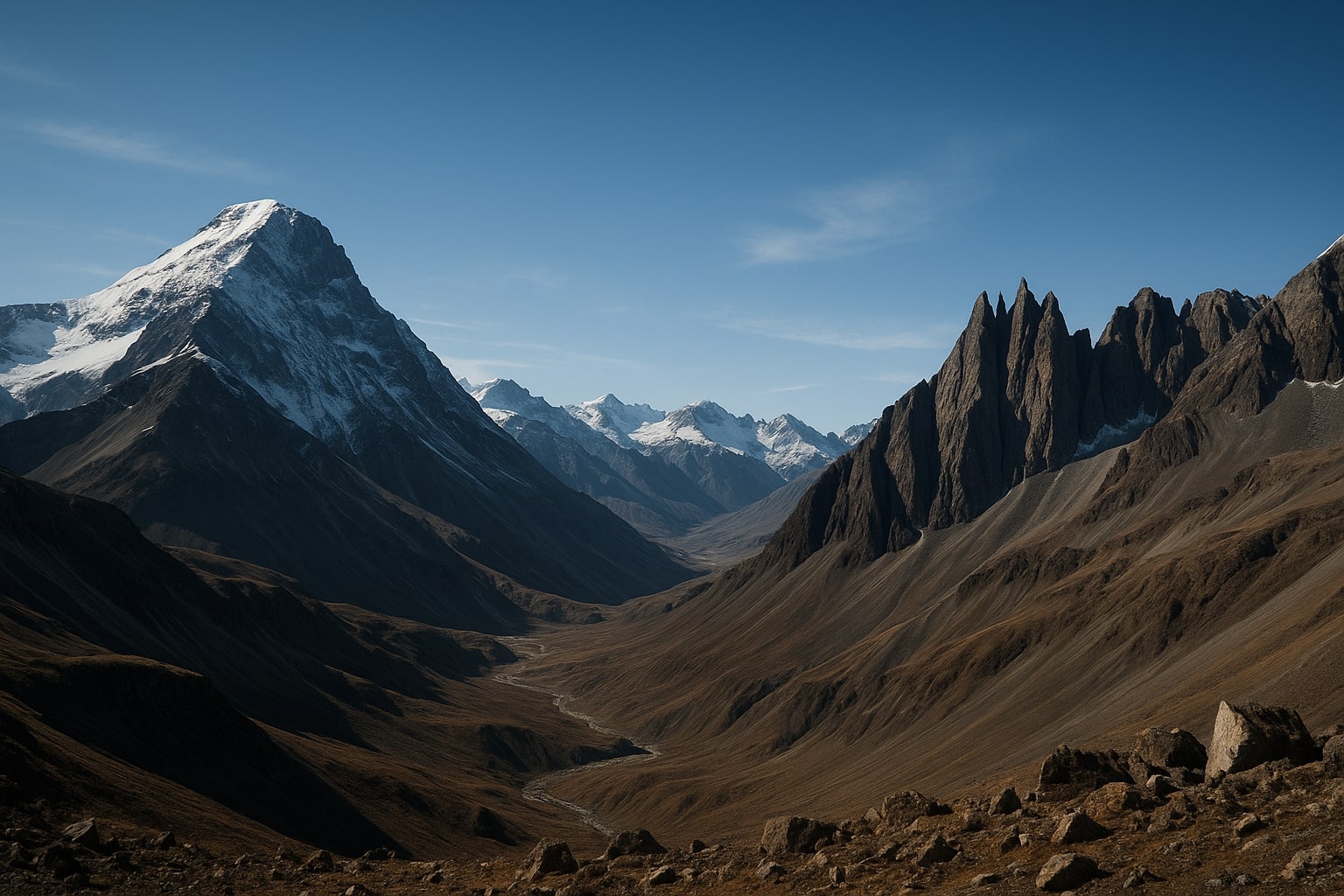 High-latitude ranges are smaller than Earth's great chains but endure bitter cold (−30 to −10 °C at night, 0–20 °C by day). Occasional snowmelt feeds aquifers beneath the Combs. Thin air and brutal winds make these heights as lethal as Everest.
Climate and Day/Night Cycle
-
Rotation Length. Each planetary day spans 812 hours.
-
Dawn and Dusk. Twilight lasts roughly 14 hours at both ends of the rotation, offering brief windows of mild temperatures (15–25 °C).
-
Thermal Progression.
- Rotations 2–5: 25–55 °C
- Rotations 6–9: 35–65 °C (peak heat)
- Rotations 10–13: 50–80 °C
- Rotations 14–16: 35–65 °C
- Rotations 17–18: 25–45 °C (sunset)
- Rotations 19–22: 20–40 °C
- Rotations 23–26: 15–35 °C
- Rotations 27–30: 10–20 °C
- Rotations 31–34: 0–10 °C (coldest span before dawn)
-
Rain Cycle. Scant precipitation appears late in the night cycle, when temperatures drop enough for condensation to fall as brief mist.
Flora and Fauna
Agriculture
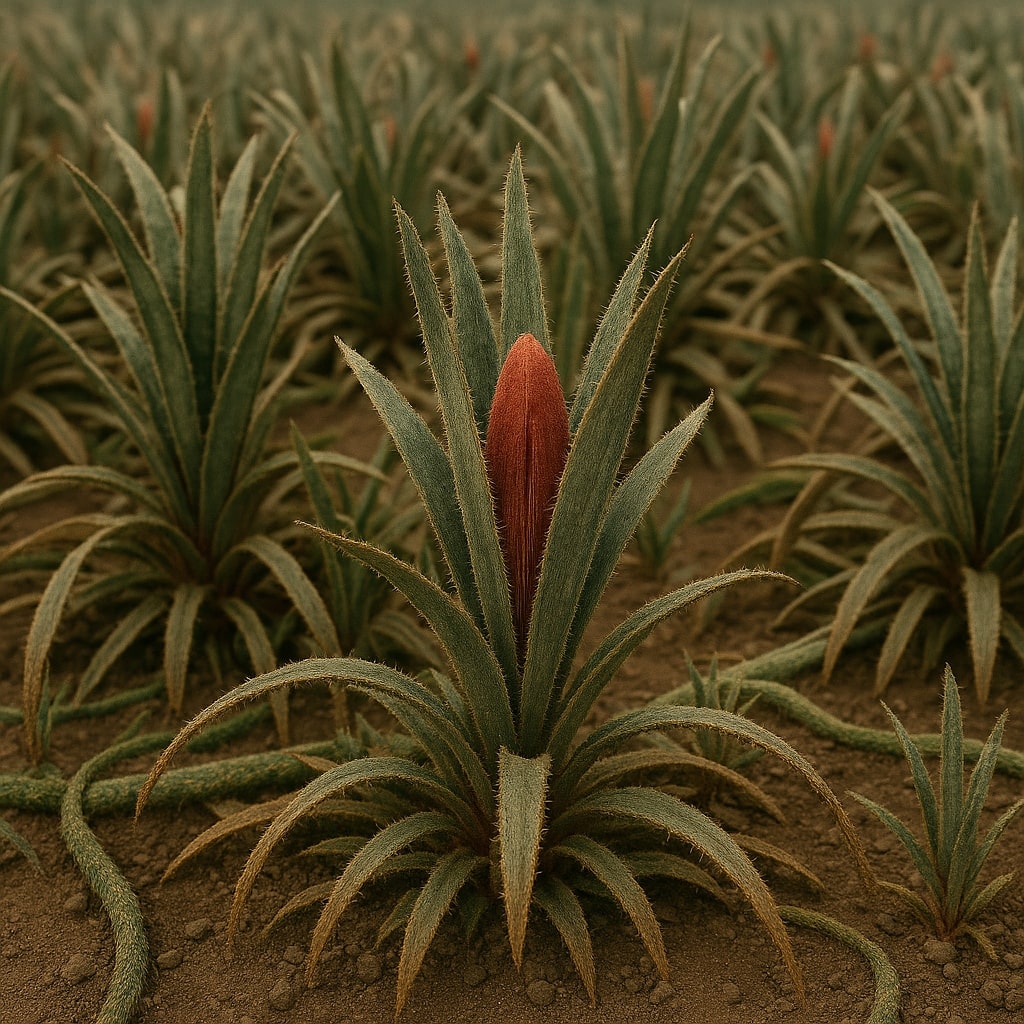 Surface agriculture is rare; hydroponic towers inside the Combs supplement imported food. Poatag, a brown-grey leathery plant with a red, fibrous flesh, excels as a durable textile fiber source.
Wildlife
- Escaped, Wild Ecosystem: Desert mice, guinea pigs, chinchillas, mountain cats, fennec foxes, numerous birds of prey, hardy beetles.
- Domestic Animals Llamas, hardy goats and quail-like animals are raised by nomads and sometimes adapted to cavern life.
- Hazards. Venomous lizards, scorpions, and aggressive wasp analogues can be found but like all life on the surface, are relatively rare. Bioengineered pterodactyl-like reptiles are considered the planetary emblem and are protected unless they are actively attacking people.
Soundscape
Despite its reputation for silence, the desert hums with life. Desert fox howls, chinchilla chirrs, distant raptor calls, and the gentle bleating of llama herds accompany night watches for surface nomads.
Notable Locations
- Guelmim Ascent. A mountain face south of the Combs, 60 km distant.